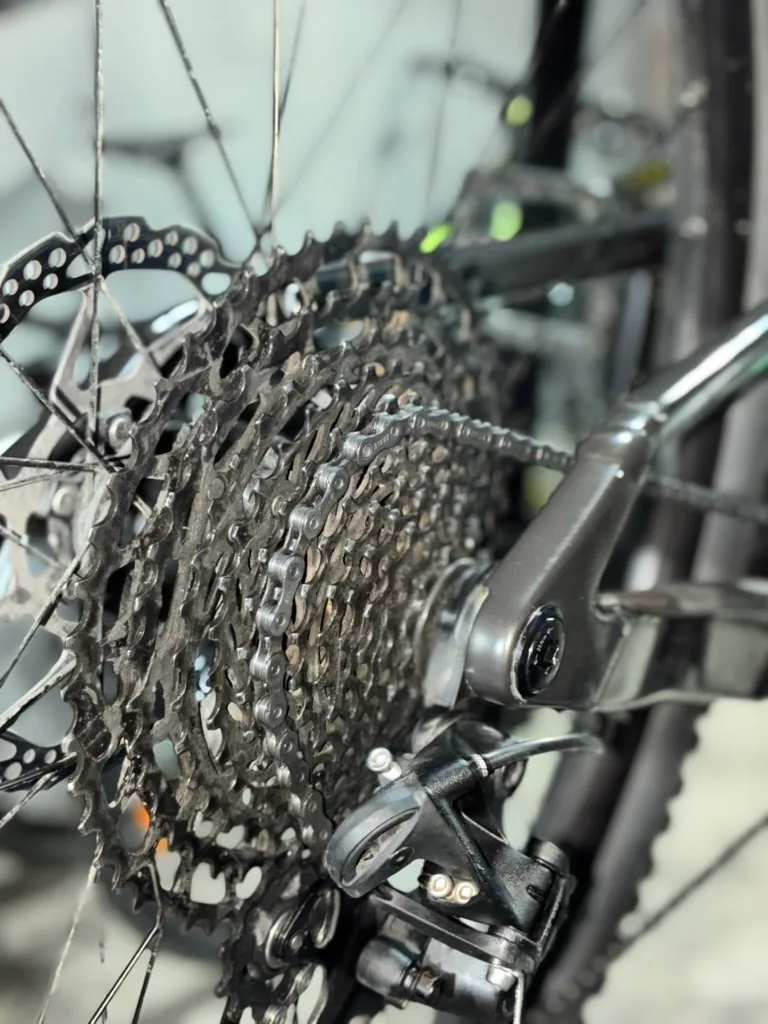
The question we get most is “how often?”. The honest answer depends more on the conditions you ride in than on distance covered. A thousand kilometres of dry tarmac is easier on a bike than two hundred through mud and standing water.
Signs worth acting on
- The chain skips under load when climbing — usually a worn chain or cassette.
- The brake lever pulls close to the bar before it bites — air or moisture in the system.
- A creak that follows your pedalling rhythm — bottom bracket or pedals, not the chain.
- The wheel shimmies on smooth tarmac — a buckled rim or loose spokes.
- The fork leaves an oily ring on the stanchions or dives more than it used to — seals.
A sensible rhythm
For riding a few times a week: a basic tune at the start of the season and a full service once a year. If you ride mountain in the wet and pressure-wash the bike often, bearings will want attention after about six months — water forced into a bearing is the single most common cause of an expensive repair.
The chain is a consumable, not part of a service. Check it with a wear gauge and replace it at 0.5% stretch — done consistently, the cassette and chainrings last several times longer.